Showing posts with label Water. Show all posts

Sunday, January 6, 2013

Drink Filtered Water

Quality, think about quality.  This is a topic I will be addressing later in much more depth, but let's start with water quality.  Is all water the same?  Definitely not.

My friend who lives in the state of Washington has excellent quality tap water that comes from natural springs and wells.  She can drink her tap water!  The rest of us should look for a better water source.  Typically, tap water is highly processed and contains a number of pollutants.  The most recent findings in our tap water during the past five years is that tap water contains pharmaceuticals. 

The following is a list of better options.  The most popular option, water in plastic bottles or containers, I do not recommend.  See the glass not plastic post.

1.  Carbon filters - these are the filters that come with your refrigerator and are used by PUR and Britta systems that mount on your kitchen faucet.  If you are drinking filtered water from your refrigerator, be sure to fill a glass pitcher or bottle the night before so that the water is room temperature when you are ready to drink it.

Pros - relatively inexpensive  and water available when needed

Cons - filters out the least amount of pollutants and if you don't change them regularly, you might be dumping pollutants into your water from the spent filter 


2.  Reverse Osmosis - home system that mounts under your kitchen sink.  I am in the process of remodeling my kitchen and I have chosen this option.  My husband just installed an RO water system for us this week.  We have been drinking RO water from the store up to this point.
 
Pros - one of the best quality water options available, very convenient, and water available when needed 

Cons - $300 to $400 initial investment, high replacement filter cost, and wastes a lot of water while being processed


3.  Reverse Osmosis (or Deionized) - commercial units at stores

Pros - one of the best quality water options available, inexpensive, and available at many stores

Cons - less convenient since bottles must be filled and brought home
In 2008, a study about plasticizers leaching from plastic bottles and a study about small amounts of pharmaceuticals showing up in tap water all over the U.S.  were released. I emailed PUR  who said their filters were probably not filtering these drugs out. We were drinking water stored in plastic jugs when traveling and PUR filtered water at home. 

Thus I decided it was time for a change.  We would drink only reverse osmosis water from glass containers.  This presented somewhat of a problem on our homeschool trips in our little RV. We took with us plastic one gallon containers which we refilled with RO water at grocery stores.   


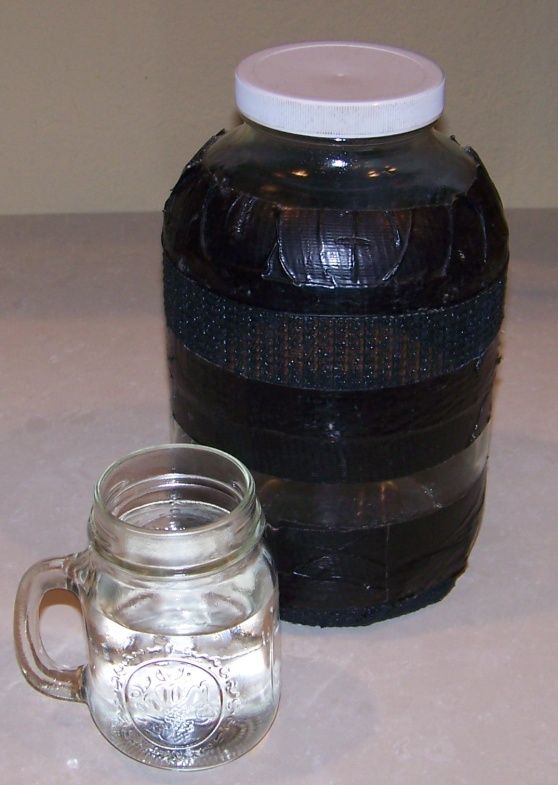
The solution I found for our trips worked quite well.  In fact, it worked so well that I continued when we got home.  I purchased eight glass one-gallon bottles, and filled them at grocery stores with RO water.  I found nice wide mouth bottles on-line from uline.

These jars are small, manageable, and very reasonably priced (about $3.50 each).  After we finished our traveling, I have continued to use these bottles exclusively for our drinking water at home until now.  The bottle in the photo above is about five years old.  I bought thin black shelf-liner and black duct tape and wrapped the bottle (as shown) to prevent the bottles from clinging together and breaking.  It has worked very well.
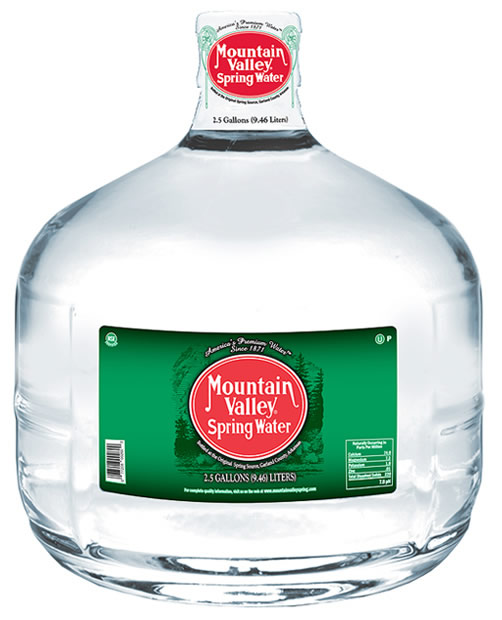

Another option is to get a 2.5-gallon glass water bottle of Mountain Valley Spring water.  A bit heavier but still manageable.  However, last time I checked, the deposit on the bottles was $20 (though a one time investment).  Mountain Valley also has 5-gallon glass water bottles but I don't recommend them.  They are too heavy even for a strong person.


4.  Home Delivery in glass bottles - Mountain Valley Spring water in glass bottles is also available for home delivery.

Pros - good quality natural water

Cons - very expensive, and if getting the 5-gallon bottle, very hard to manage 

Thursday, January 3, 2013

Drink Room Temperature Water

Are you a polar bear?

If not, drink room temperature water.  This one many people have problems with.  I know, I used to desire a glass filled with ice no matter what I was drinking.  Oddly enough, after a few weeks of drinking room temperature water, one typically no longer desires the ice cold drink (except perhaps on a hot Texas summer day when it is 110 °F).  I know if you are currently drinking cold water that you probably don't believe me.  But give it a try for a couple weeks, I think you will be surprised.

People have been consuming ice cold drinks throughout the day every day of the year for less than one hundred years.  It is hard to believe that this recent trend in history has become so commonplace and so accepted as normal by all Americans.  Prior to refrigeration, ice was not readily available.  Having a refreshing cool drink in the heat of the summer was a very special treat, something only the rich could afford, a status symbol.  It has become a very unhealthy addiction for many.

Why does this matter?  Our internal body temperature is normally 98.6 °F.  Our guts are amazing; they house an extremely corrosive environment with a pH that can drop to as low as 1 or 2 after a high protein meal.  This drop is necessary and beneficial to properly digest the foods we eat.  When healthy and in-balance, our guts also contain a high flora of beneficial bacteria.

Taking antibiotics (or ingesting them through the foods we eat), consuming antacids, and eating man-processed foods are a few of the ways we destroy the health of our gut.  One of the first things you want to do when eating healthy is to get your gut health back to normal.  Heartburn, leaky gut syndrome, Candida and yeast infections, colon cancer, and obesity are just a few signs of an unhealthy gut.

A simple starting point to healing your gut is to stop drinking ice cold drinks.  Think about what happens if you place your arm or leg in ice cold water.  Your muscles stiffen up and do not function as well.  Keep this picture in your mind when you drink an ice cold drink.  Room temperature water is so much easier on your stomach. 

Though a glass of room temperature water may not sound that appealing to you right now, it is a very simple and easy change to make which can make a big difference to your health.

" I can do all things through Him who strengthens me."  Philippians 4:13

Wednesday, January 2, 2013

Glass, Not Plastic

Glass is brittle and breaks easily; plastic is everywhere and seems to be indestructible.  So why don't I want to drink water from a plastic cup or bottle?

Infertility, breast cancer, early sexual development, endometriosis, asthma.  All diseases which have rampantly increased over the last 50 years or so.  Any connection to plastics?  I think so.  I do not feel there are any safe plastics, and I suggest drinking out of glass.  If you are interested in learning more, I have provided a little information to get you started and then I suggest you research the topic further yourself.

Glass is a ceramic material that is formed at high temperatures.  Glass is an amorphous solid and its elements are chemically sealed in its structure.  Nothing leaches out of glass.  Glass occurs in nature as obsidian (black volcanic glass) and the main component of all glass is silica (sand).  If you think about it, you know that all harsh chemicals (strong acids and bases) are stored in glass flasks.  This is because glass is so inert. 

Plastic, on the other hand, is a man-made material that was developed from by-products of the petroleum industry.  Due to the nature of the hydrogen carbon chains that make-up a plastic's structure, all plastic materials will leach chemicals. 

Are any plastics o.k.?  Recent media coverage would suggest that there are acceptable plastics for food use.  I don't agree.  Let me tell you why.

I googled 'plastic leaching' and found the following information from a site,
 http://www.care2.com/greenliving/which-plastics-are-safe.html.  It states,

"The news about plastics has been pretty alarming lately, causing some of us to go dashing for the water bottles to see what kind of plastic they are—and find out if we’ve been unwittingly poisoning our children and ourselves with chemicals leaching into the water from them.
If you’ve been concerned, here is a handy chart that identifies the good, bad, and OK plastics and where they are found. Find out here:
1 Polyethylene terephthalate (PET or PETE)
Used to make soft drink, water, sports drink, ketchup, and salad dressing bottles, and peanut butter, pickle, jelly and jam jars.
GOOD: Not known to leach any chemicals that are suspected of causing cancer or disrupting hormones."

All sounds good, or does it?  Not known to leach any chemicals that are suspected of causing cancer or disrupting hormones???  First of all, how much testing has been done and what other ill health effects might these new plastics cause.  Second, unlike glass, they are leaching some chemicals, just not ones thought to cause cancer or disrupt your hormones.

As a ceramic engineer, I know that there are no good plastics for food use.  All plastics leach plasticizers and other chemicals. Plasticizers are used to make plastics more flexible.  That is why it is recommended to purchase hard plastics because they contain less plasticizers.  Plasticizers act as hormone disruptors.  What kind of problems might be linked to plasticizers?  Per

http://www.sustainableproduction.org/downloads/PhthalateAlternatives-January2011.pdf, "These studies have identified a possible association between exposure to phthalates and male reproductive malformation, sperm damage, fertility impairment, female reproductive tract diseases, early puberty in girls, asthma, and thyroid effects. Adverse effects on the lungs, liver and kidneys have been observed in animals and in some limited human studies."


I could go on and on, but I think I have exposed the tip of the iceberg for you.  If for no other reason, I think water tastes much better out of a glass than a plastic cup.  Switch to glass and see if you don't agree.